

PORTFOLIO
Do You Really Need Project Portfolio Management?
Dawid Jasinski, PhD · 5 min read
If your projects still somehow strangely fail to deliver business value, you’d better read this.
In many companies, project portfolio management looks like this:
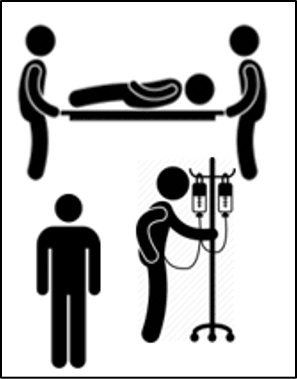
- We select projects to be implemented. Some with great potential, some with high ambitions but no potential and some that have neither one nor the other - as a result of a compromise 😉


- We allocate resources to individual projects. The project with the title "must succeed" gets the most and best quality resources. The rest of the projects from now on will be called "hope it works" or "we'll figure it out later".

- Ready, steady, go. The starting pistol goes off, and the run to the finish line begins. But it turns out that the "must succeed" project only has to give half of its resources to the "hope it works" project, because its boss, a well-known scumbag, as a result of political games and a loud voice, won himself a piece of the cake with a cherry on top. As a result of the redeployment of resources, both projects are now walking to the finish line at an even pace. The "we'll figure it out later" project cannot run and can at most walk, but it is better at crawling.

- Attention: obstacle in the way! Unfortunately, the "it will work out somehow" project failed to notice a puddle on the road in the knee position, fell into it and drowned. The "must succeed" and "we'll figure it out later" projects, although they did not miss the obstacle either, walked on the back of the "hope it works" project and passes the danger with dry feet.

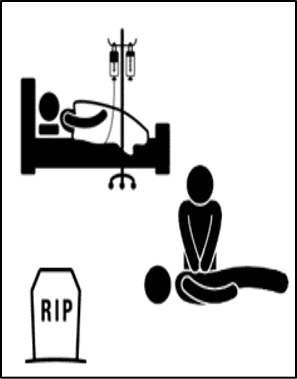
- Pitstop. During the review, it turned out that "must succeed" unfortunately did not succeed and "we'll figure it out later", as the only hope for success, were stuffed with mask and oxygen bottle until the last lap.

- Finish. Unfortunately, oxygen ran out halfway through, so the "we'll figure it out later" rested in peace deservedly after a heroic fight to the last breath. However, his old friends carried him to the finish line to open the champagne and celebrate the completion of the project!





A better solution is the following sequence:
- We select projects for implementation. The main selection criteria are compatibility with company strategy and business value. In a simple scoring system, the steering committee evaluates project proposals and only lets through those that meet the above criteria for further implementation.


- We allocate resources to individual projects. Resources are allocated for the completion of the next iteration. If it is delivered, the project receives another portion of resources. The best staff are allocated to projects that require it for merit reasons, not for project importance reasons. Not everyone is happy. There is not enough funding for one project, so the project goes back on the waiting list.


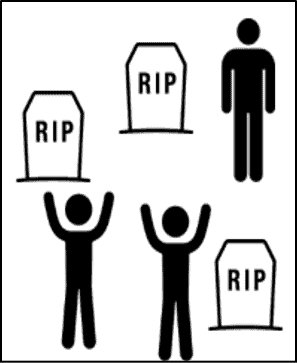
- Ready, steady, go. Before the projects got off the ground for good, one of them had a heart attack and died. It turned out that the assumptions about his health were wrong and the project ended before it started. Resources became free again, and another lucky project got his chance. One project got unexpectedly out of breath around the first corner but was allowed to run on.

- Attention: obstacle in the way! The breathlessness appeared not to stop, and the project did not look likely to finish so was ruled out of further running. Further resources were released to the delight of the reserve projects.

- Pitstop. One project was diagnosed with a strained muscle during the inspection, so he did not set off to continue the run. He was very disappointed as there was one lap left to finish. His condition meant he had no chance of reaching the finish line. The pool of free resources expanded again.

- Finish. Two projects reached the finish line. They were in such good shape that they ran further to the shop and bought champagne with their own money to celebrate the success. A day later, another winner appeared at the finish line, having started from a reserve list thanks to the resources released by the project who had been excluded. After two days, another three were added to the winner's circle thanks to resources released by less fortunate competitors.






Project portfolio management is not a sprint but a relay race; A long-distance relay in which the final result is not determined by one player's great work, but by the entire team.
But, if you were looking for a more practical definition of project portfolio management, you can find it here:
Project portfolio management is not a sprint but a relay race; A long-distance relay in which the final result is not determined by one player's great work, but by the entire team [1].
Let me give you this definition in a more illustrative way.
Let's say you have more project proposals than resources to implement them. So you need to select only some of them for implementation. It is crucial to choose those projects that have a clear vision of business value. It does not mean that the projects should be risk-free. The Project Significance Index (PSI) must be positive. A positive PSI means that the project's expected business value, after taking into account the risks, is greater than the costs. If you want to know how to calculate PSI, take a look at my previous article.
Sometimes, people who decide to start new projects are so attached to them that they fail to see that the project's business utility is inadequate to the cost. For this reason, PSI should be evaluated by more than one person. When one person calculates PSI and then selects projects for implementation, it is straightforward for projects to be included in the portfolio for selfish rather than business reasons.
The result of poor selection is a basket of projects whose estimated value is lower than projects outside the basket. Sometimes project stakeholders feel that a project does not bring benefits. It leads to doubts from various quarters about the project. The motivation of the team decreases, and with it, the chance for success.
When you carry out 3 projects in a company, you know very well what their health status is, the risks, and their expected completion date. When there are ten projects, things get a bit more complicated. When they are managed by different people using different tools, the picture slowly becomes unclear. When you add to this, the organisational company's structure, the power game, and the internal ambitions of line managers and/or project managers, control of the project basket becomes illusory. The real value of given projects is unknown. You don't know whether the company's resources are allocated to the right projects. You don't know whether it's profitable to continue a project and whether you're missing out on better business opportunities.
When you control projects in a standardised way, it is easier to find those that do not fit into the project portfolio and thus do not fulfil the company's strategic and/or business goals.
Sometimes by focusing too much on the details of individual projects and on trying to complete a project successfully, you may not realise that you are first across the finish line but in the wrong competition.
1. APM, Body of Knowledge, https://www.apm.org.uk/body-of-knowledge/, accessed: 26.07.2018
References
- APM, Body of Knowledge, https://www.apm.org.uk/body-of-knowledge/, accessed: 26.07.2018 ↩
One idea a month on portfolio decisions
No schedule padding, no roundups. A single method, failure pattern or decision framework, explained properly.