

PORTFOLIO
Using IRACIS to Compare the Business Value of Projects
Dawid Jasinski, PhD · 11 min read
IRACIS is a great tool used to assess the set of business values in the project. This model allows the assessment of tangible and intangible values of both the customer and supplier.
A great tool used to assess the set of business values is the model developed by C. Gane and T. Sarson[1], known as IRACIS, derived from the first letters of English words defining three main groups of values, i.e.: IR - Increase Revenue AC - Avoid Costs and IS - Improve Service'.
Historical overview
IRACIS was created for the purpose of evaluating the implementation of new IT systems in enterprises. In the 1970s and 1980s, the creation of an IT system required significant financial outlays. Largely due to the cost of physical components of the IT network. For this reason, the decision to computerize the company was often preceded by an analysis of the benefits that this change could contribute to.
At that time, IT knowledge was not so common that one could easily predict the potential advantages of introducing an IT system in an enterprise. Therefore, most of its advantages related to increasing the effectiveness of the company's activities aimed at increasing revenues. The possibilities of reducing expenses, e.g. due to the automation of some processes leading to a reduction in the number of people performing them, were not so obvious to many leaders of enterprises. The impact of new systems on increasing customer satisfaction of companies implementing them was equally underestimated. Thus, thanks to such things as computerisation of some banking services, institutions using such solutions attracted new customers interested in the possibilities of making bank transfers at any time of the day or night via telephone.
The IRACIS model was created for the purpose of comprehensive assessment of the business value created thanks to the implementation of new IT systems. It made it possible to comprehensively assess business benefits, also intangible ones, resulting from the implementation of new solutions. It also allowed to sensitise users that not only the IT system creates additional business value, but the effects of its operation. Many business owners in the early stages of implementing these solutions were irritated by the lack of the expected results of their operation, mistakenly thinking that they should in themselves provide profits to the company.
Types of benefits
As a result of literature review, M. Parker and R. Benson present over a hundred categories of benefits[2]. The use of the IRACIS model in numerous IT and business projects has confirmed that all of them can be expressed in three categories describing the IRACIS model[3].
It allows the project contractor to evaluate a project in terms of business value. The assessment of the increase in project income and the possible reduction of costs in it can be recognised by the project team. The impact of activities undertaken as part of the project to improve the service can be determined by the project team, because knowledge of the client's needs and their prioritisation is required to successfully complete the project.
The simplicity of the IRACIS model and the ability to comprehensively assess business value in projects underpin its application by authorities in project management[4] and by other practitioners and theorists in project management, finance and business analytics[5].
Value Chain
Osborne and T. Gaebler in 1992 presented in their publication[6] the value chain model, which assumes that the organisation's set goals lead to achieving certain effects of its efforts. These in turn create specific results. The words ‘effect’ and ‘result’ can be considered synonyms. With reference to the description of this value chain model, "effect" is understood to be the result of an action. The end of the project will be the effect of achieving the project's goals. The effect of the project card development process is the developed project card. ‘Result’ is understood as a consequence of the actions taken and refers to their effects. The result of the end of the project will therefore be creation of the value for the customer and the company.
The result of developing a project card will be the opportunity to move on to further project implementation. Organisational goals can be achieved thanks to the results of projects that result from their effects (products, services ...). The effects of the project are the consequence of the project's goals- as illustrated in Fig. 1.
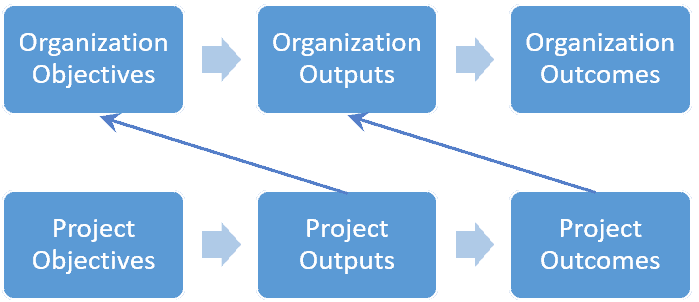
Fig.1. Value chain model of D. Osborne and T. Gaebler
Source: own study based on R. Thomsett, 2000, Radical Project Management, Prentice Hall PTR, Upper Saddle River, p. 114.
An example can be the organisation's willingness to be an innovation leader. If this were its goal, the effect of these intentions would be to increase the pace of developing new technologies. The result of the ventures will be more frequent appearance of innovative products on the market.
To achieve this result, the goal of the project could also be to reduce the duration of the project. To achieve this goal, you may need to improve project management processes. The effect will be the improvement of project management processes through the implementation of project management methodology. However, the result of the actions taken will be the completion of project tasks in a shorter time. In other words, there should be a relationship between the project's goals and the organisation's results. An enterprise cannot achieve the intended results without meeting the project's objectives. The relationship between the project goal, its effects and results deserves attention in the example above. As a result of the project, whose goal was to shorten the duration of the project, a new methodology is developed. It creates the primary or direct benefits of the project. When used correctly, the new methodology will lead to the result of the project, which is a secondary or indirect benefit. As shown in Fig. 1.2, the primary objectives of the project lead to primary benefits. Primary benefits, in turn, lead to indirect benefits. This benefit chain can be assessed using IRACIS[7].

Fig. 2 Chain of benefits
Source: own study based on R. Thomsett, 2002, Radical Project Management, Prentice Hall PTR, Upper Saddle River, p. 113.
Each project should have primary business goals that explain the legitimacy of investing the company's resources in its implementation instead of into another venture[8]. The main project goals are an expression of the high level of economic justification of the project. It is important that the project goals are in line with the business goals[9]. If there is no business problem, then the solution should not be provided for it by the project[10].
The IRACIS model is often used in combination with agile or extreme project management methods[11]. They offer a flexible approach to planning and implementing complex projects, which is similar to the method of assessing business value using the IRACIS model. The goal of the IRACIS model is not to accurately calculate the business value obtained, as is done using e.g. ROI, but to estimate, at a high level of generalisation, the benefits of project implementation. Accurate calculation of business value in projects is often impossible because the assessment of intangible values cannot be represented by financial indicators.
The IRACIS model, on the other hand, enables the assessment of a wide range of tangible and intangible values that the aforementioned tools do not offer. The assessment of a wide spectrum of business values is particularly important in research and development projects, because sometimes their goal is to obtain only intangible values that cannot be represented by hard financial indicators.
For example, if the goal of the project is to make it easier for the customer to place orders, the direct result of the project will not be an increase in the company's revenues, but an improvement in satisfaction. It may, however, contribute to the increase of the company's revenues or avoidance of costs caused by the need to perform additional work through manual order processing. However, these values do not occur as direct consequences of the implemented project.
According to the author, both revenue growth and cost avoidance should be assessed if they are a direct result of the project. It also seems that the improvement of the service may relate to values obtained directly as a result of the implemented project or arising after some time.

Fig. 3 Value chain
Source: own study based on R. Thomsett, 2002, Radical Project Management, Prentice Hall PTR, Upper Saddle River, p. 113.
Project effects, delivering these values are the result of the project team achieving its goals. They provide direct benefits from the implementation of the project[12]. Direct benefits are associated with indirect benefits that may occur in the long run after the project is completed[13]. They create project results that are also a carrier of business value resulting from the impact of project effects on project stakeholders. They occur later than the project effects, which is why they are called indirect or secondary benefits[14].
Therefore, if we used the example discussed earlier, the assessment of the project value, whose goal would be to shorten the time of project implementation, using IRACIS, could look as shown in Table 1.
Table 1 Application of the IRACIS model
|
Project objective: shortening the project implementation time |
Project effect: streamlining project management processes by implementing project management methodology |
Project result: completing project tasks in a shorter time |
| Value: | Cost reduction (some tasks have been automated, others take up less time, reduced downtime for prototype machines) | Improved service (internal clients are served more efficiently, the number of errors at work is reduced due to the introduction of automation of some activities, the number of queries about the results of work due to the standardisation of the form of its results are reduced) |
| Increasing revenues (faster commercialisation of projects generates additional revenues from new products) | ||
| Improved service (structured project flow increases work comfort) |
Source: own study.
The IRACIS model is used prior to starting the project to determine whether the business value to be the result of its implementation is sufficient to make a decision to invest the enterprise's funds in it[15].
Multidimensional analysis of business value using the IRACIS model provides business justification, often required by the project sponsor to implement it. The IRACIS model is also used to assess the business value generated as part of the project's completion[16]. Business values resulting from the project implementation are grouped according to the three groups of values that make up the IRACIS model.
The IRACIS model does not specify whether the values to be evaluated are to be quantitative or qualitative, while data to be discrete, continuous or categorical. Values that increase revenue or avoid costs can therefore be expressed using indicators other than financial indicators, such as ROI or ROA[17]. They can also take the form ‘more than’ or ‘less than’. The assessment of service or service improvement can also be made using other indicators, e.g. "customer satisfaction", and using attribute data.
The variety of types of data that can be used with the IRACIS model and the wide range of values that can be taken into account in the assessment means that the IRACIS model is readily used in practice. Although business value assessments using it are not as accurate as using hard financial indicators, it allows for multidimensional assessment of business value in a project. Its advantage is also the ability to assess the impact on the business value of those events or project components that are not assessed using other tools.
All project stakeholders can benefit from assessing business value using the IRACIS model. This model allows the assessment of tangible and intangible values of both the enterprise implementing the project and its beneficiaries. Using the IRACIS model before starting the project can guarantee better recognition of the business value to be provided by the project. This in turn allows the detection of factors that do not bring the expected value and their elimination.
[1] Gane C., Sarson T., 1979, Structured Systems Analysis. Tools and Techniques, Prentice-Hall, New Jeresy, p. 156.
[2] Parker M., Benson R., Trainor H., 1988, Information Economics. Linking Business Performance to Information Technology, Prentice-Hall, Englewood Cliffs, pp. 249-260.
[3] Thomsett R., 2002, Radical Project Management, Prentice Hall PTR, Upper Saddle River, p. 115.
[4] Wysocki R.K., 2014, Effective Complex Project Management. An Adaptive Agile Framework For Delivering Business Value, J. Ross Publishing, Plantation, pp. 70-71.
[5] Wysocki R.K., 2010, Adaptive Project Framework. Managing Complexity in the Face of Uncertainty, Pearson Education, Boston, s. 20; Wysocki R.K., 2011, The Business Analyst. A New Partnership for Managing Complexity and Uncertainty, Wiley, Hoboken, p. 26; Russell L., 2015, Project Management for Trainers, ATD Press, Alexandria, p. 14; Williams S., Williams N., 2007, The Profit Impact of Business Intelligence, Elsevier, Amsterdam, sp 3; C. Gane, T. Sarson, 1979, cited issue, s. 156; M. Parker, R. Benson, H. Trainor, 1988, cited issue, p. 249; Soundararajan S., Arthur J.D., Balci O., 2012, A Methodology for Assessing Agile Software Development Methods, 2012 Agile Conference, IEEE, Dallas issue 11; S. Shvetha A. James, B. Osman, 2009, cited issue, p. 190; J. Langmayer, P. Pesout, 2012, Common Data and Controlling General Ledger paradigm of Banking Data Services; Chatterjee S., Maharastra M., Managing EAI Projects in Agile Way. Your Road Towards a Successful EAI Implementation, https://www.google.pl/url?sa=t&rct=j&q=&esrc=s&source=web&cd=1&cad=rja&uact=8&ved=0ahUKEwiIn_DwqvzVAhUQKFAKHSslBRsQFggnMAA&url=http%3A%2F%2Fciteseerx.ist.psu.edu%2Fviewdoc%2Fdownload%3Fdoi%3D10.1.1.125.4658%26rep%3Drep1%26type%3Dpdf&usg=AFQjCNHmuN0ndu0RuF6t5ZT2jLVHVPgZww (29.08.2017); Patton I., 2008, Ambiguous business value harms software products, IEEE Software, vol. 25, no 1, p. 50; Highsmith J., 2010, Agile Project Management. Creating Innovative Products, Addison-Wesley, Upper Saddle River, p. 6; Pesout P., Andrle M., 2011, Insurance Fraud Management as an Integrated Part of Business Intelligence Framework, International Journal of Social, Behavioral, Educational, Economic, Business and Industrial Engineering, vol. 5, nr 11, p. 1388; Purdue J., 2007, IRACIS – A Roadmap to Business Intelligence ROI, http://ezinearticles.com/?IRACIS---A-Roadmap-to-Business-Intelligence-ROI&id=673225 (31.08.2017); Jakobsen C.M., 2001, XPM – From Idea to Realization. Critical Approach to the Concept of XPM, http://www.glyn.dk/download/synopsisXPM.pdf (31.08.2017)
[6] D. Osborne, T. Gaebler, 1992, Reinventing Government. How the Entrepreneurial Spirit is Transforming the Public Sector, Addison-Wesley Pub. Co, New York.
[7] R. Thomsett, 2002, cited issue, p. 114.
[8] L. Russell, 2015, cited issue, p. 11; R.K. Wysocki, 2010, cited issue, p. 20.
[9] R. Thomsett, 2002, cited issue, p. 114.
[10] L. Russell, 2015, cited issue, p. 11.
[11] S. Chatterjee, M. Maharastra, cited issue; S. Shvetha, A. James, 2012, cited issue, p. 11; S. Soundararajan, A. James, B. Osman, 2009, cited issue, p. 190; R.K. Wysocki, 2010, cited issue, p. 20; C.M. Jakobsen, 2001, cited issue
[12] R. Thomsett, 2002, cited issue, p. 114.
[13] Therein, p. 114.
[14] Therein, p. 114.
[15] L. Russell, 2015, cited issue, p. 11.
[16] S. Soundararajan, A. James, O. Balci, 2012, cited issue
[17] Therein.
One idea a month on portfolio decisions
No schedule padding, no roundups. A single method, failure pattern or decision framework, explained properly.