

PROJECT
Traditional, Agile or Hybrid?
Dawid Jasinski, PhD · 13 min read
The companies that discover changes and possibilities within the project management methods first and make use of them will be considered to be prime movers and often more successful than those who adapt late.
What type of dress do you prefer: classic, sporty or casual? To answer this question, it would be good to know where we are going and with whom.
When we go to the neighbourhood shop, it doesn't matter what we're wearing. When we go on a long journey, it's good to have something for every occasion.
In the theatre, a suit is best. At the gym, a dress that doesn't restrict movement and allows you to move quickly.
If you don't know where you're going, casual clothes are probably best - unless you're going with kids. Then it's best to wear sporty clothes. Other clothes might not be up to the challenge 🙂
It's the same with projects. Contrary to the agitators of one project management method's superiority over another, choosing the best solution depends on the type of project and project team. Not all teams can carry out both traditional and agile projects. This requires a different mindset, tools and skills.
We can divide all projects according to two criteria:
- clarity of the project goal
- clarity of the project solution - that is, whether we know how to achieve this goal.
In this way, we can build a four-element matrix. We can assign the best project management method at a given moment to each project. The rule is simple: the less we know about the project objective and solution, the more we should lean towards agile methods (Let's forget about the extreme and emertxe models for a moment!).

Figure 1. The four quadrants of the project management models
Source: R. K. Wysocki, 2014, Effective Project Management: Traditional, Agile, Extreme, Wiley, Indiana, p. 8 [1]
Why?
Agile methods are like sportswear, they don't creep up on you, and in most cases, they get you to your goal faster. This is due to the arrangement of the Iron Triangle.
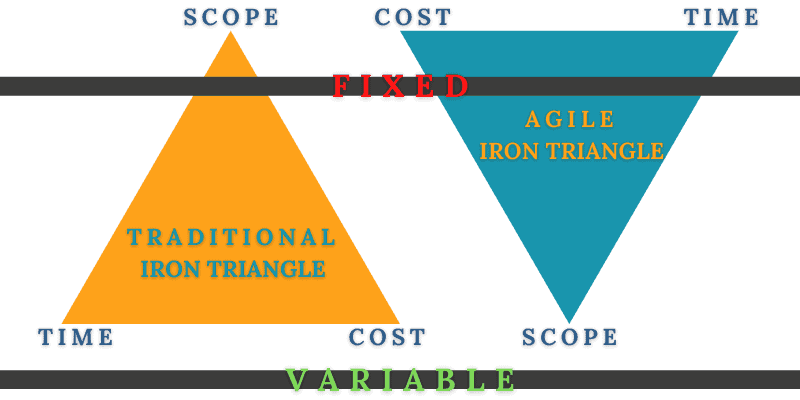
Figure 2. The traditional and agile iron triangle
Source: M. Griffiths, 2015, PMI-ACP Exam Prep, RCM Publications, p.26 [2]
The vertices of the Iron Triangle are scope, cost and time. The top vertices are fixed. The lower vertices, on the other hand, are variable. In traditional methods this means that the project's scope is to be met, even if it costs more or finishes later. In agile methods, cost and time are fixed while the scope is variable. Therefore, the scope of the project will be reduced if there is not enough time or money to complete it.
This presentation of the differences between traditional and agile methods ruled out for years the use of agile methods in industries where the project scope was relatively rigid, such as automotive. "The budget in the project for the new BMW model has run out. Our car will, therefore, be produced without doors. Sorry."
As proponents and opponents of agile methods dug in ever tighter to their positions, a debate among theoreticians and practitioners about the definition of success in a project began. Is a successful project one that has delivered the agreed scope of work without exceeding the planned budget and delivery time?
Suppose that the situation on the market has changed in such a way that part of the scope will no longer be needed in the course of the project. But we stick to the terms of the contract and do our job because it's convenient, safe, and we're doing quite well, so why increase the risk of something going wrong? This way, we deliver the project on time, on budget and in line with the scope of work. The problem is that nobody needs it anymore because... it has no value for the client.
To avoid these curiosities, the Agile Iron Triangle has evolved into the Agile Triangle. Its vertices are defined by value, the constraints defined by the Iron Triangle (scope, cost, time), and quality. The Agile Triangle makes the project's quality and constraints depending on the value that the project is supposed to deliver, the core reason for its existence.
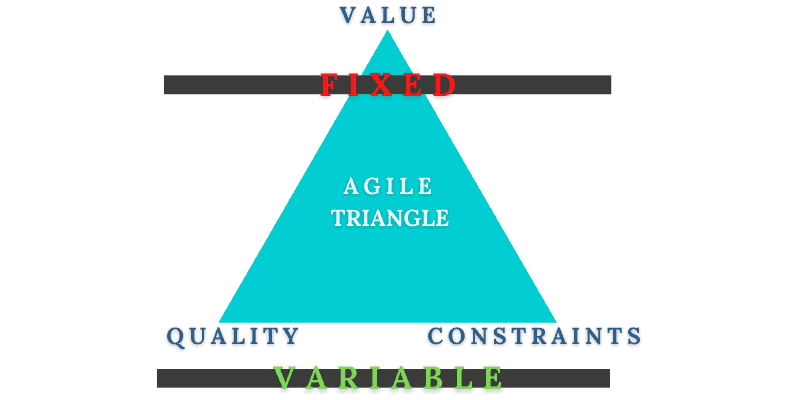
Figure 3. The agile triangle
Source: J. Highsmith, 2010, Agile Project Management, Pearson Education, Boston, p.21 [3]
Imagine you have a wedding anniversary today. You have ordered a painting as a gift for your wife/husband. The courier has just brought the painting. Your wife/husband comes home in two hours. By now, you want to hang the painting on the wall. But you have no tools and only 5 euros in your wallet. That's not enough for a hammer and nails. What do you do?
Traditional Iron Triangle: The hole has to be made in the wall! Your wife/husband comes home in two hours. By now, you want to hang the painting on the wall. But you have no tools and only 5 euros in your wallet. That's not enough for a hammer and nails.
What do you do?
Traditional Iron Triangle: Put a hole in the wall!
If you have no money, borrow from a friend and buy tools. Don't have a friend? Wait until your next payday and buy tools.
Agile Iron Triangle: The hole has to be made today. Cash is not to be borrowed. If you don't have money for tools, glue the painting to the wall.
Hybrid Triangle: wife/husband is supposed to be happy. Don't have the tools or the money? Ignore it and take your spouse for a romantic walk.
If agile methods are so cool, why traditional methods?
Traditional methods work well in two situations:
- When projects are similar to each other. For example, window replacement projects in detached houses. You know that first, we have to determine the requirements of the customer: the colour of the windows, price class, ... Then we have to send a man to take the measurements, order the right windows from the supplier, arrange the installation, replace the windows, dispose of the old windows, ... In these projects the goal and the solution are clear. We can, therefore, plan most of the project work with a high degree of accuracy and probability. We can prepare standard forms for contacts, measurements, orders, etc. We can prepare checklists to make sure we haven't forgotten anything.
- When we are working on highly regulated projects, such as a nuclear power plant project. You know that several things have to be done before the project is completed. It is also known that not everything can be planned in advance due to the project's complexity and the number of variables involved. Finally, all safety-critical work must be done - no matter how long it takes or how much it costs.
OK, so what are hybrid methods and what is it for?
Hybrid project management methods are a combination of traditional and agile methods. We can distinguish three such combinations:
1 two methods are used to manage the project at different stages of the project.
This type of hybrid method applies to projects where the project's goal or solution is not clear enough in the initial planning phase to define the overall project work. To speed up the start of the work and avoid unnecessary planning, the project is started using the agile method. Once the project's goal and solutions have been discovered, the method is changed to a traditional one to reduce risks through process repeatability, using standard tools (e.g. checklists) or good practice.
Example: Building a production hall. When it is unknown where and what size hall should be built to maximize ROI, an initial phase of business and technical analysis can be started using the agile method. When it is known where the hall is to be built and what size it should be, the project can be implemented using the traditional method.
2 one method is used to manage part of a project. The entire project is managed using another method.
Let's suppose that agile method is used to manage part of a project but the entire project is managed using the traditional method. This type of hybrid method can be used when the project's main goal or solution is not known, but the sub-goal is.
Example: a research project funded by the European Union. The solution to the project is unknown. However, it is known that financial management must follow a strict procedure. Therefore, the whole project will be managed using the agile method, but financial management will follow the traditional method.
3 Two methods are used in parallel to manage separate parts of the project.
This type of hybrid method can be used when two parts of the project can be developed simultaneously and are relatively independent of each other.
Example: Design an engine (or electronic devices where hardware and software can be developed independently). When the dimensions and general technical parameters are known, but the calibration and software are not.

Figure 4. The hybrid project management methods
Hybrid project management methods can be compared to hybrid cars. Such cars have two engines: a combustion engine and an electric motor. Their use depends on where (goal) and how (solution) we want to go. The use of two engines gives more flexibility than each of them separately.
However, a hybrid car is much more complicated and usually more expensive than models with similar technical parameters and only one type of drive. However, the driving experience is guaranteed, and the risk of having to stop charging the battery is minimal.
OK, let's now come back to the extreme and emertxe project management methods.
These methods are used to manage projects whose goal is not clearly defined at the beginning of the project.
In the emertxe method, the goal is unknown, but the solution is known. Imagine that your company has just accidentally invented a glue with meagre adhesive strength. Great, we have an answer, but no one asked for it. The trick is to find a business application (goal) for this glue. So you could say that I am implementing the project backwards, from the solution to the goal. Consider that the name of the emertxe model spelt backwards is extreme. The emertxe method, therefore, is the reverse of the extreme method.
Example: Post-it note. Read more here: Post-it Note - Wikipedia.
And what is this extreme method?
The extreme method is used for projects where both the goal and the solution are unclear.
Confused?
Remember that the primary goal of the project is to create business value.
Imagine that your company has a specific budget for investment. Many investment opportunities are ranging from investments or optimization of production processes to R&D projects. R&D projects involve a high risk of failure. The vast majority of them are a waste of money and time. However, if one of the projects succeeds, the business result usually covers all the losses from previous R&D projects.
Example: development of new chemical substances by pharmaceutical companies. The probability of success here is 1.7%. Therefore, only one out of 100 projects succeed. Despite this, the pharmaceutical industry has been doing well for years, and there are no indications that this will change shortly.
If figure 1 shows all project management methods, where is the hybrid method? As you already know, a hybrid method is created from the simultaneous or sequential application of other methods; it can be traditional and agile, traditional and extreme, agile and emertxe, or any different combination of the above.
A hybrid method may consist of more than two methods. In practice, this solution seems unattractive due to its complexity. So I will stop here with further consideration of this case and return to the key question:
Which method works best in the Automotive industry?
The development of the following project management methods after the traditional method arose from the need to reduce the risk arising from the uncertainty of the project goal and/or solution. If it were not for this risk, we would manage the project using the traditional method. The goal and solution are clear. We could plan all the project work with great accuracy, create checklists and quality control gates and then automate and optimize endlessly.
Our goal should be to move towards a situation where there is an indication to use the traditional method. The following methods desirable to use are the agile method, emertxe, and extreme. The extreme method is the least desirable because the indication to use it comes from the greatest risk of project failure. The traditional method should therefore be the default choice.
When during the analysis of the goal and solution it turns out that the project should not be managed using the traditional method, we should consider whether it is possible to extract that part of the project where the solution or goal is unclear and manage it using agile, emertxe or extreme method.
When we cannot isolate such part of the project, our next choice will be the agile method.
Despite using the agile method for project management, perhaps there is a part of the project to which the traditional method can be applied. If so, then do so. If not, then using the agile method to manage the project is the best option.
If the agile method is not appropriate for clarity of goal and solution, perhaps you can isolate a portion of the project to be managed using the extreme or emertxe method. If so, then do so. If not, the best solution is to use the extreme or emertxe method to manage the project- depending on your knowledge of the project's goal and solution.
Despite using the extreme or emertxe method to manage the project, there may be a part of the project to apply the traditional or agile method. If so, then do so. If not, the best solution is to use the extreme or emertxe method to manage the entire project.
You can download a tool for selecting the suitable project management model here and at the beginning of this article.
What is in it for me?
If you know which project management method is the right for your project, you can apply the proper project management methodology & tools.
If the traditional method is the right one for your project, you can pull out the project management handbook from the Project Management Institute and use it. Your project should follow one of the following project management life cycles:
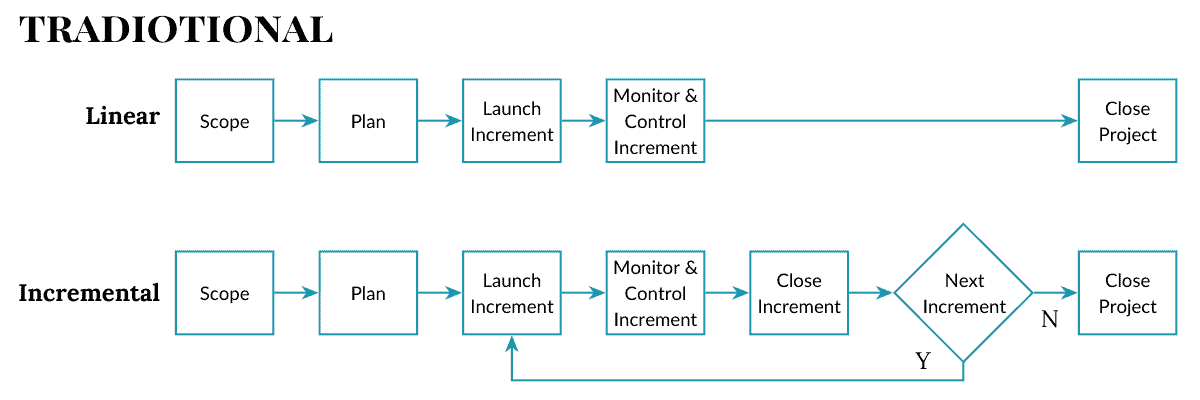
Figure 5. The project management lifecycles of traditional project management method.
Source: R.K. Wysocki, 2014, Effective Complex Project Management. An Adaptive Agile Framework For Delivering Business Value, J. Ross Publishing, Plantation, p. 59. [4]
If the agile method is suitable for your project, you can pull out Mike Griffiths' manual or the SCRUM manual and get handfuls from it. You can also download my agile project management tool HERE. Your project should follow one of the following project management life cycles:

Figure 5. The project management lifecycles of agile project management method.
Source: R.K. Wysocki, 2014, Effective Complex Project Management. An Adaptive Agile Framework For Delivering Business Value, J. Ross Publishing, Plantation, p. 59. [5]
If the extreme or emertxe method is suitable for your project, you can pull out Mike Griffiths workbook or SCRUM workbook and get handfuls from it. You can also download my extreme and emertxe project management tool HERE. Your project should follow one of the following project management life cycles:

Figure 5. The project management lifecycles of extreme project management method.
Source: R.K. Wysocki, 2014, Effective Complex Project Management. An Adaptive Agile Framework For Delivering Business Value, J. Ross Publishing, Plantation, p. 59. [6]
You can use the same tools for agile, extreme and emertxe project management. The main difference between these methods is in the planning. In agile, you may be tempted to plan the whole project with decreasing level of detail. Or you can keep the automotive-specific project phases and treat them as individual releases. In the extreme and emertxe method the planning should not exceed one release. If not, the best solution is to use the extreme or emertxe method to manage the project- depending on your knowledge of the project's goal and solution.
If the hybrid method is suitable for your project, you should, first of all, make sure that the team has the required knowledge and experience in managing both agile and traditional methods. Equally crucial to the success of the project is getting buy-in from the leadership for the hybrid method.
As the acceptance of agile methods in automotive projects increases, so will the importance of hybrid models.
The companies that discover changes and possibilities within the project management methods first and make use of them will be considered to be prime movers and often more successful than those who adapt late.
The companies that discover changes and possibilities within the project management methods first and make use of them will be considered to be prime movers and often more successful than those who adapt late.
References
- R. K. Wysocki, 2014, Effective Project Management: Traditional, Agile, Extreme, Wiley, Indiana, p. 8 ↩
- M. Griffiths, 2015, PMI-ACP Exam Prep, RCM Publications, p.26 ↩
- J. Highsmith, 2010, Agile Project Management, Pearson Education, Boston, p.21 ↩
- R.K. Wysocki, 2014, Effective Complex Project Management. An Adaptive Agile Framework For Delivering Business Value, J. Ross Publishing, Plantation, p. 59. ↩
- R.K. Wysocki, 2014, Effective Complex Project Management. An Adaptive Agile Framework For Delivering Business Value, J. Ross Publishing, Plantation, p. 59. ↩
- R.K. Wysocki, 2014, Effective Complex Project Management. An Adaptive Agile Framework For Delivering Business Value, J. Ross Publishing, Plantation, p. 59. ↩
One idea a month on portfolio decisions
No schedule padding, no roundups. A single method, failure pattern or decision framework, explained properly.